
Prof Madhav Gadgil (1942-2026), founder of CES
Share this story on


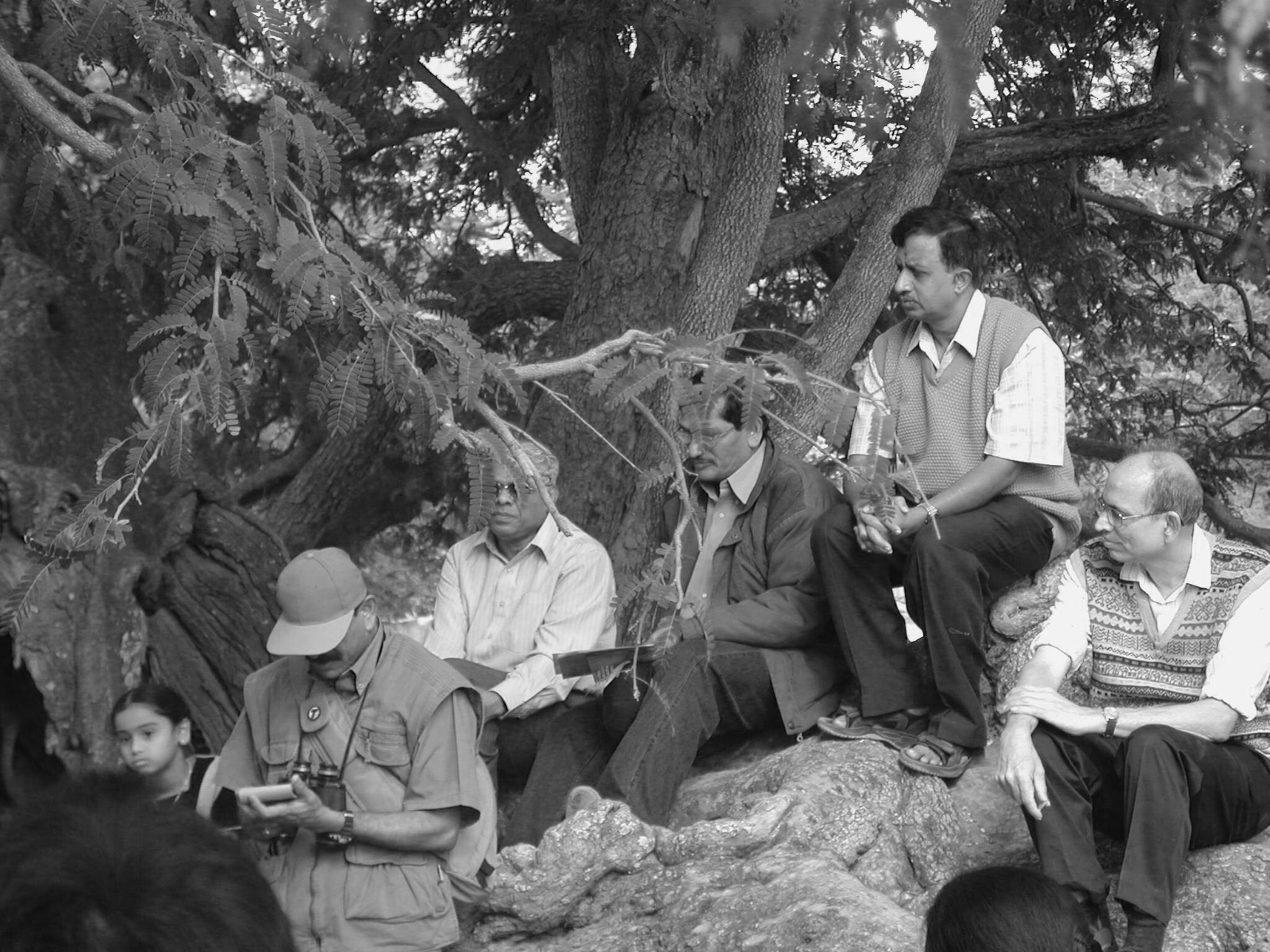
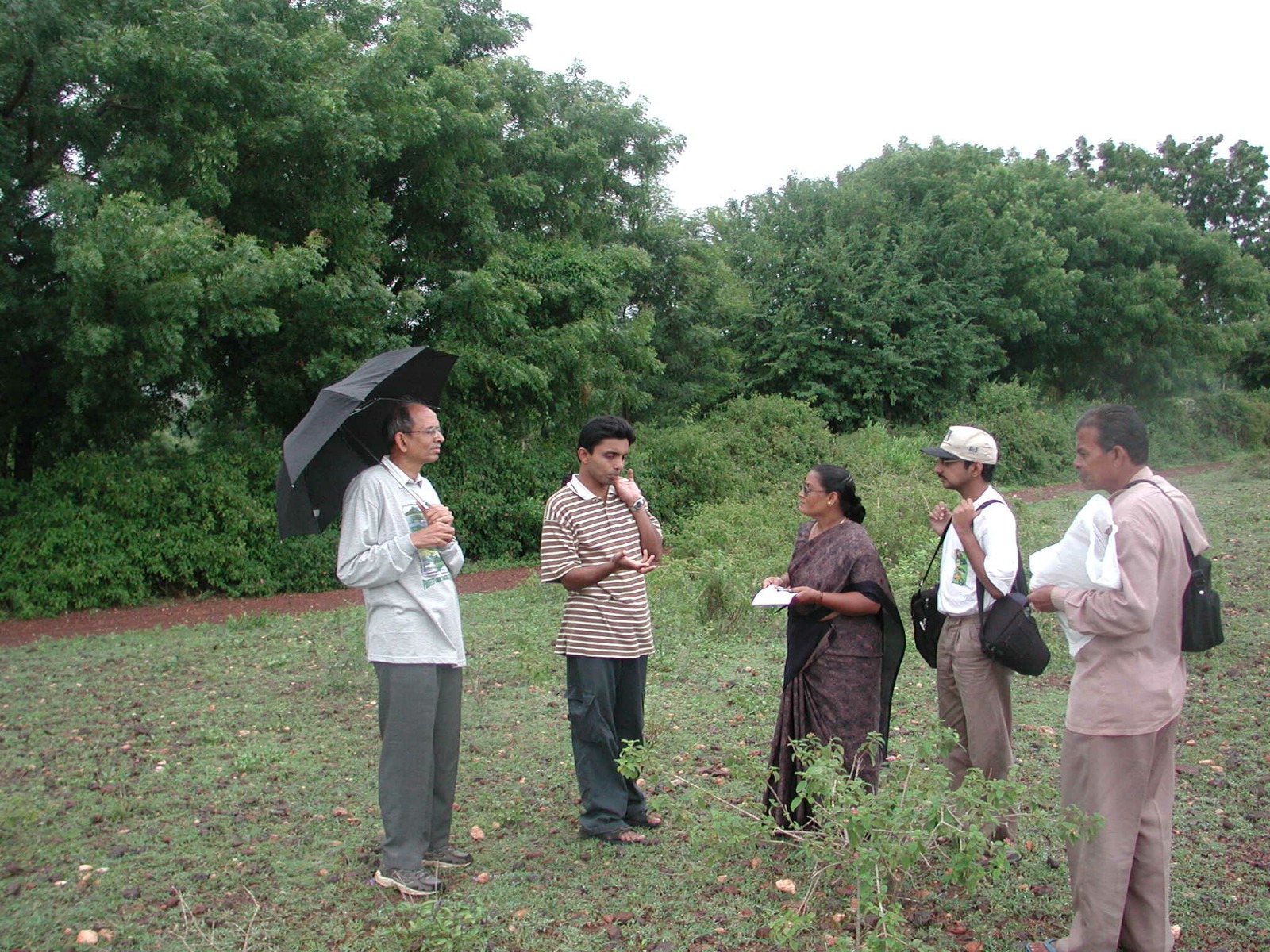
Professor Madhav Gadgil passed away in Pune after a brief illness on 7th January 2026. After completing a PhD in 1969 from Harvard University, he taught there for two years before returning to India and served for a further two years at the Agharkar Research Institute at Pune. In 1973, he joined the Indian Institute of Science as faculty in the Centre for Theoretical Studies from where he launched several research programmes in ecology and behaviour with a small team of students, postdocs and field researchers. In 1983, he founded the Centre for Ecological Sciences at IISc with support from the Department of Environment, Govt. of India. Professor Gadgil is credited with introducing the evolutionary approach to the study of animal behaviour and ecology in the country which attracted a large number of young scientists over the years and made Bangalore, and IISc in particular, the academic capital of this discipline.
Professor Gadgil’s academic contributions cover a number of fields including theoretical ecology, plant ecology, wildlife ecology, human ecology, and ecological history which resulted in over 200 peer-reviewed journal publications, six books and a large number of articles in the media. Many of his early papers in theoretical biology became citation classics. His scientific achievements were recognized through his election to the fellowship of all the three major science academies in India, the World Academy of Sciences, and the US National Academy of Sciences.
He also leaves behind a formidable legacy in nature conservation, both through his scientific writings, field involvement at grassroots level and his consistent engagement with policy at various levels of national government as well as international institutions such as the Global Environment Facility of the United Nations. In recent times, he chaired the preparation of the Western Ghats Ecology Expert Report (2011), a very influential and talked about report which came to be known widely as the Gadgil Committee Report. Professor Gadgil was honoured for his contributions to conservation through the Volvo Environment Prize (2003), the Tyler Prize for Environmental Achievement (2015), and UN Champions of the Earth (2024). The Indian government also honoured him with the Padma Shri (1981) and the Padma Bhushan (2006).
Apart from his scientific excellence, he will be remembered for his extensive field knowledge and love of the Western Ghats, his support to the cause of tribal people, and his firm belief in democratic approaches to achieving nature conservation. Professor Madhav Gadgil retired from the Indian Institute of Science in 2004. His wife, Professor Sulochana Gadgil, who also served at IISc for many decades, passed away a few months ago.
R. Sukumar
It is with great sadness and shock that we learnt about the passing away of Prof. Madhav Gadgil on 7th January 2026.
Some of us have been associated with Prof. Madhav Gadgil since his days at the Centre for Theoretical Studies and have participated with him in the founding and development of the Centre for Ecological Sciences (CES). Today, his students, grand-students, great grand-students and many others have the privilege to study and work at CES and carry forward the formidable legacy he has left behind. Madhav Gadgil pioneered modern ecology, evolutionary biology, conservation biology and much else in India. Prior to this he did pioneering work in evolutionary biology at Harvard University; his work is still read, recognised and cited. Madhav Gadgil has set very high standards in basic research with rigour and conservation science with people at the centre. We endeavour to maintain his legacy for future generations.
We the students, staff and faculty of CES offer our heartfelt condolences to you and your families. His passing away is very sad but Madhav was the kind of person whose life deserves to be celebrated and emulated by all of us.
Raghavendra Gadagkar
Working with Madhav on the Western Ghats Ecology Expert Panel was an exposure to how decisions were democratically taken, matters of fundamental importance discussed at great length, the best minds consulted, and people at all levels involved. I remember Madhav recounting how when Section 149 (?) was slapped on him in Sindhudurg District in Maharashtra (banning more than 5 people to be assembled) when Madhav was attempting to talk to villagers about their real concerns, someone came up with the idea of getting people to write their concerns on paper and come and deliver these papers, one by one, in an orderly fashion so that he could not be booked under the Indian Penal Code! Madhav told me that he had collected hundreds of such petitions (bags full) and planned to write them up some day. I do not know if he made progress in this, but it showed how deeply committed Madhav was to hearing the voice of the people and making it heard.
I will treasure my 3 years working on the Western Ghats Ecology Report and can truly say that Madhav was the driving force behind it all.
Renee Borges
Add new comment